Nov 10, 2026 |
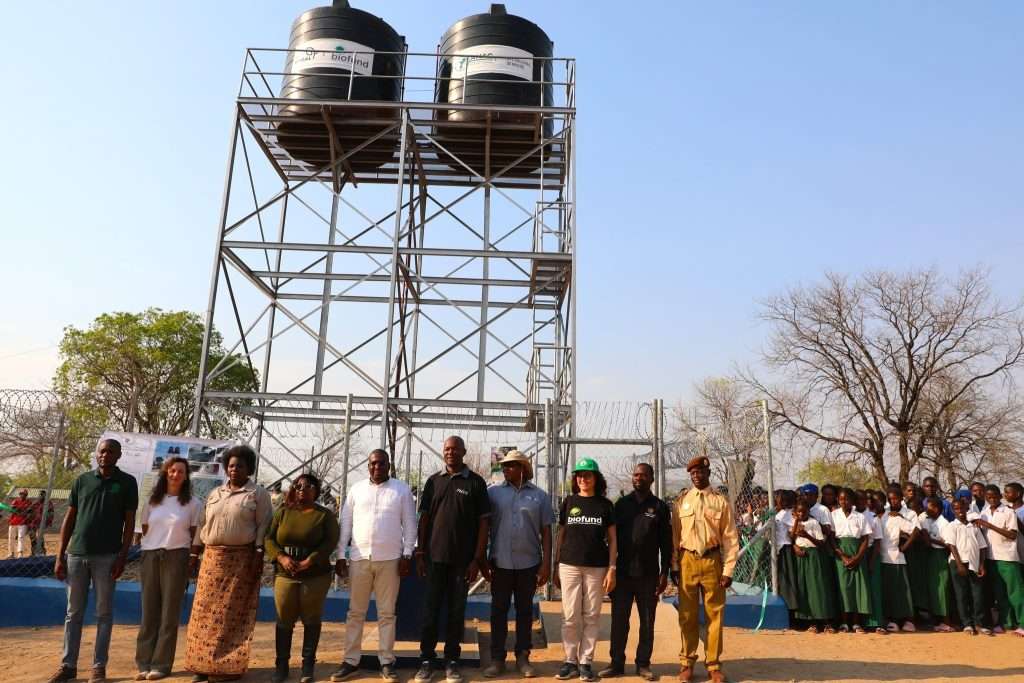
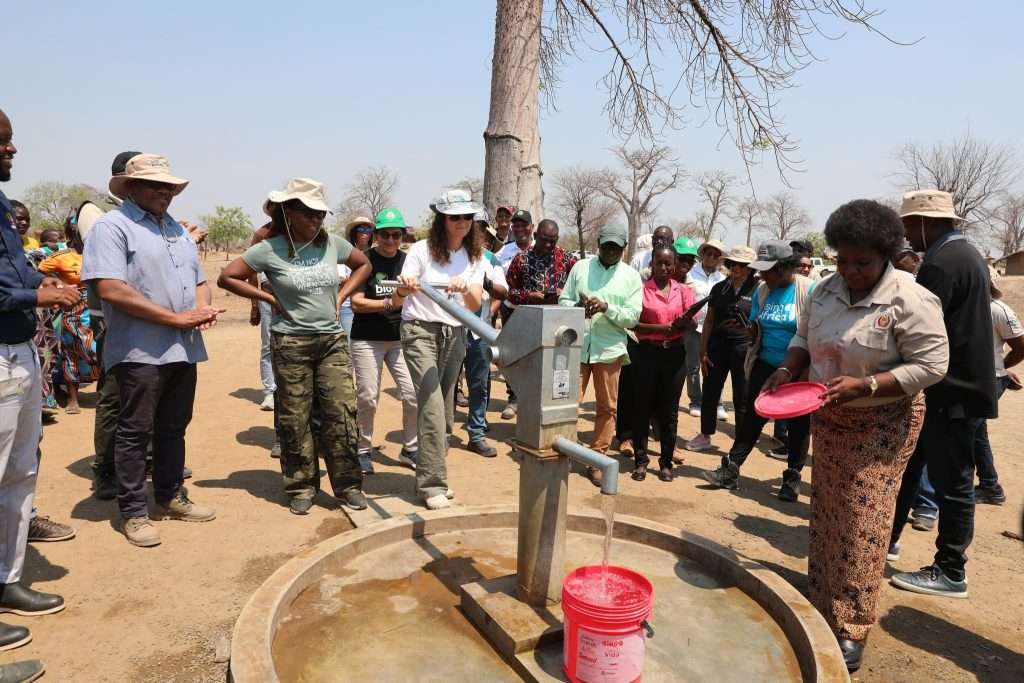
Around two thousand people in Macacate, in Cahora Bassa, now have water close to home, through a system that combines conservation and development under the MozRural programme.
According to BIOFUND, the infrastructure, located next to Mágoè National Park, in Tete province, can reach six thousand inhabitants. It runs on solar power and has four water points with eight taps.
It was inaugurated during a supervision mission of the programme, funded by the World Bank, with ANAC, FNDS and BIOFUND, which is the fiduciary agent for the conservation component.
The project also aims to reduce conflict between people and wildlife, as the ANAC representative, Nilton Iombaiomba, emphasised. BIOFUND has installed 12 water points in nine communities. In Cazewe, one of them, residents used to draw water from a river with crocodiles.
Elephants are another front. According to BIOFUND, the park’s operations room tracks 21 elephants by GPS, in a population estimated at around 600. In Macacate, a 31.6-hectare electric fence, supported by the Mozambique Wildlife Alliance (MWA), protects the machambas of 21 families. “In the past we suffered from elephant invasions, but now, with the fence, we are able to produce,” said farmer Carlitos Chacimba to BIOFUND.
A firebreak is also being opened to mark the boundaries of the park and the buffer zone on the ground. The work already employs 147 people from 14 communities.
The measures add to the MWA’s work in the same region. In May, the organisation trained 343 members of nine communities in Mágoè in preventing and responding to human-wildlife conflict, 42% of them women, and created new protected farming communities in the Guebuza 1 and 2 neighbourhoods and in Nhabando, according to the Mozambique Wildlife Alliance.
Photos: BIOFUND