May 5, 2026 |
Between 2007 and 2025, the citizen science platform iNaturalist recorded around 32% of the diversity of sharks and rays, but a Mozambican study highlights gaps in conservation.
The research analysed 408 records submitted to the iNaturalist platform, enabling the identification of 44 species validated at the specific level, out of a total of 53 recorded. This dataset already represents around a third of the known diversity of sharks and rays (elasmobranchs) in the country, highlighting the potential of citizen science to complement traditional scientific efforts.
The study, published in the scientific journal Frontiers , concludes that citizen science platforms are transforming knowledge of Mozambican marine biodiversity, but also highlight significant gaps in the conservation of sharks and rays (elasmobranchs) along the country’s coastline.
The study was authored by Dércio Maoze, from the Faculty of Natural Sciences at Lúrio University in Pemba, and from the BCSS Ocean Observatory and Kisawa Sanctuary on Benguerra Island; Jule Buschmann, from the All Out Africa Marine Research Centre in Praia do Tofo; Acácio Chechene, from the Wildlife Conservation Society in Mozambique; David van Beuningen, from the Wildlife Conservation Society’s Western Indian Ocean Shark and Ray Conservation Program in Cape Town; and Mario Lebrato, who is also affiliated with the BCSS Ocean Observatory and Kisawa Sanctuary.
The results show a clear upward trend in sightings, particularly from 2019 onwards, reflecting greater public engagement, the expansion of marine tourism and improved access to digital technologies. Rays dominated the records, accounting for 65% of sightings, whilst sharks accounted for 35%.
From a conservation perspective, however, the situation is worrying, according to the researchers. Around 71% of the species observed are threatened according to the International Union for Conservation of Nature’s Red List, with particular emphasis on high-risk categories. Nevertheless, more than half of the records relate to species without legal protection under national fisheries regulations, highlighting a disconnect between up-to-date scientific knowledge and current legislation.
Spatial analysis also reveals significant geographical disparities. Most observations are concentrated in the south of the country, particularly in the provinces of Inhambane and Maputo, which together account for almost 90% of the records. In contrast, the central and northern regions remain under-represented, not necessarily due to the absence of species, but because of lower sampling effort, limited access and a lack of research and tourism infrastructure.
The study also identifies a significant overlap between areas with the highest number of sightings and zones classified as Important Areas for Sharks and Rays, which account for over 90% of the records. However, only 17% of sightings occur within Marine Protected Areas, pointing to a disconnect between priority conservation zones and areas actually protected by law.
Despite some limitations, such as spatial biases and occasional identification errors, most of the analysed data showed high reliability, with 82% of records classified as ‘research grade’. The authors argue that these platforms represent a complementary, accessible and low-cost tool, with the potential to support management decisions, update public policies and strengthen conservation strategies.
The study highlights the need to strengthen data collection in less-studied regions, promote training in species identification, and periodically review national legislation to align legal protection with the actual threat status of marine species in Mozambique.
The use of digital platforms by citizens and researchers is thus driving knowledge about marine biodiversity, according to a recent study demonstrating the growing role of these contributions in monitoring along the coast.
The data show a consistent trend over time, with a significant increase in observations from 2019 onwards. This trend coincides with the growth of marine tourism, greater access to smartphones and more active public participation in documenting biodiversity.
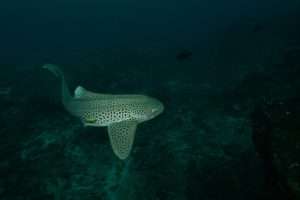
Photo: angsana.com