Nov 3, 2026 |
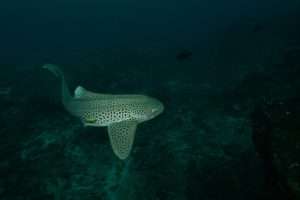
Whale sharks, orcas and hammerhead sharks are appearing with unusual frequency in Bazaruto, in a year marked by the formation of El Niño.
Scientists at the Bazaruto Center for Scientific Studies (BCSS), on Benguerra Island, say that these sightings, previously very rare, have become frequent in recent months, according to Bloomberg.
Mario Lebrato, chief scientist at the centre’s ocean observatory, acknowledges that changes in currents and water temperature in the Mozambique Channel may be affecting plankton and other food sources for marine fauna.
In statements gathered by Bloomberg, Lebrato describes the change, “We had seen zero so far and all of a sudden I’m seeing them weekly, starting at the end of last year”, but the researcher nonetheless avoids definitive conclusions about the cause: “is it El Niño-connected? I don’t know. But if you have this time series and you haven’t seen it before, you can start thinking that there might be a connection”.
According to Bloomberg’s account, in addition to orcas and whale sharks, the team recorded in the area monitored by the observatory other species not usually associated with the area, such as leatherback turtles, more hammerhead sharks than usual and a species of dolphin it had never observed. The same source indicates that this year’s El Niño is expected to be the most intense since records began, in 1950, according to the US Climate Prediction Center.
The data collected by the observatory, such as sea surface temperature, salinity, waves, tides and current speed, are used by governments and research institutions and also by engineering, oil and gas companies and consultancies, which apply them in model calibration and environmental assessments.
Among the recent sightings is a group of ten orcas found on a scientific expedition in the waters of the archipelago, whose photographs will form part of the first photo-identification catalogue of the species in the tropical southwest Indian Ocean, , as disclosed by BCSS..
The frequency of whale sharks in Bazaruto contrasts with the trend further south, where the Marine Megafauna Foundation recorded, between 2005 and 2019, an 87% fall in sightings of the species off Praia do Tofo, based on 706 photo-identified animals, according to a study published in Aquatic Conservation..
Foto: Kaitlyn McQueeney