Oct 27, 2026 |
A genetic study has confirmed that two very similar ray species live side by side in Mozambique, which is regarded as a contact zone between them.
The scientific study, led by Karla Redelinghuys of Stellenbosch University in South Africa and published in the journal Marine Biodiversity, confirms the existence of at least two whipray species of the genus Himantura in the Western Indian Ocean, according to the Marine Megafauna Foundation (MMF). The co-authors include Stephanie Venables and Andrea Marshall of the MMF, Jorge J. Sito of the Wildlife Conservation Society and researchers from the Oceanographic Research Institute and King Abdullah University of Science and Technology.
In Mozambique, both species were found in the far south, near the border with South Africa, and some 500 kilometres further north, in the Bazaruto Archipelago and at São Sebastião, with no apparent geographic separation. The authors describe Mozambique as a contact zone, a pattern already identified in wedgefish, rays listed as Critically Endangered.
Also according to the MMF, the team analysed samples from 93 rays collected between 2018 and 2024 in South Africa, Mozambique, Tanzania, on Saudi Arabia’s Red Sea coast and in Qatar. In Mozambique, the organisation supported the sampling, which was mostly carried out by divers on free-swimming animals.
Sequencing of three mitochondrial genes separated the rays into two groups with a genetic distance of more than 10%, enough to indicate distinct species. One of them, present in South Africa, Mozambique and the Red Sea, was provisionally identified as the leopard whipray (Himantura leoparda), and the other, recorded in Tanzania, Mozambique, the Red Sea and Qatar, as the reticulate whipray (Himantura uarnak).
The study also shows that the spot pattern on the back cannot be used to tell the species apart. Two adult females from South Africa, more than one metre across and classified in the field as different species, in fact belonged to the same genetic group, and one ray from Tanzania displayed three distinct patterns on the same body. The confusion extends to public DNA databases, where the same lineage appears under three scientific names.
The leopard whipray is listed globally as Endangered on the IUCN Red List, according to FishBaseFishBase, with an assessment dated March 2023. Even so, a study by the Oceanographic Research Institute based on 46 years of shore-angling competition data concluded that the population off the South African coast is stable, according to the abstract published by NISC, which attributes the result to reduced fishing effort, catch-and-release practices and no-take marine protected areas.
Until the two species can be reliably identified in the field, the authors recommend managing them as a single conservation unit in the Western Indian Ocean, while studying the biology and vulnerability of each separately.
South Africa, where the leopard whipray predominates, and Tanzania, dominated by the reticulate whipray, may need different priorities, but it is Mozambique that the study singles out as a region deserving particular attention.
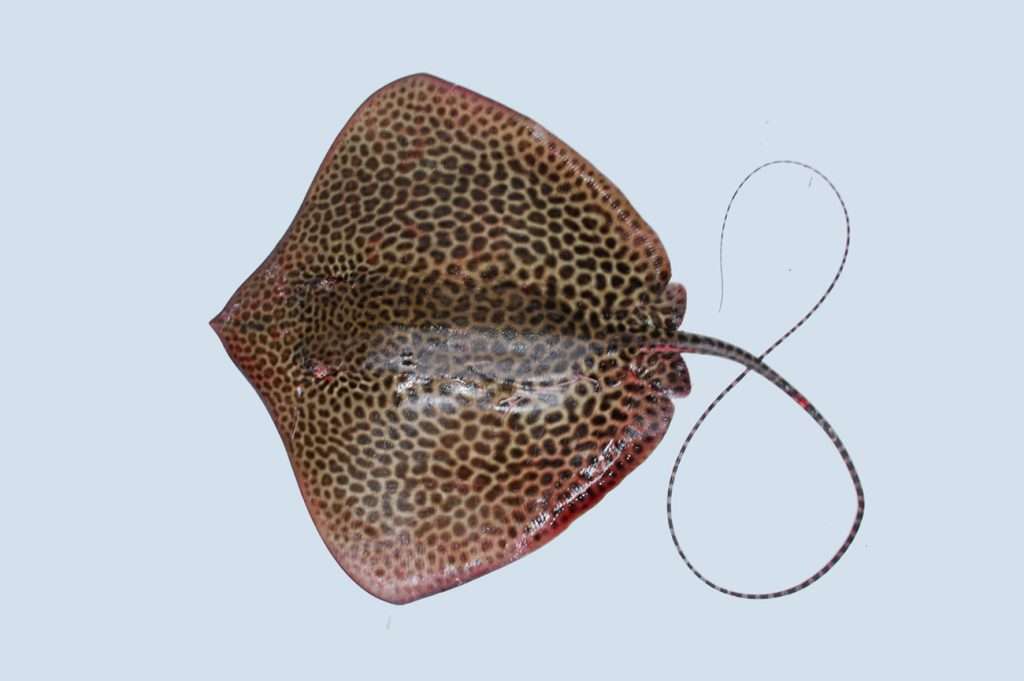
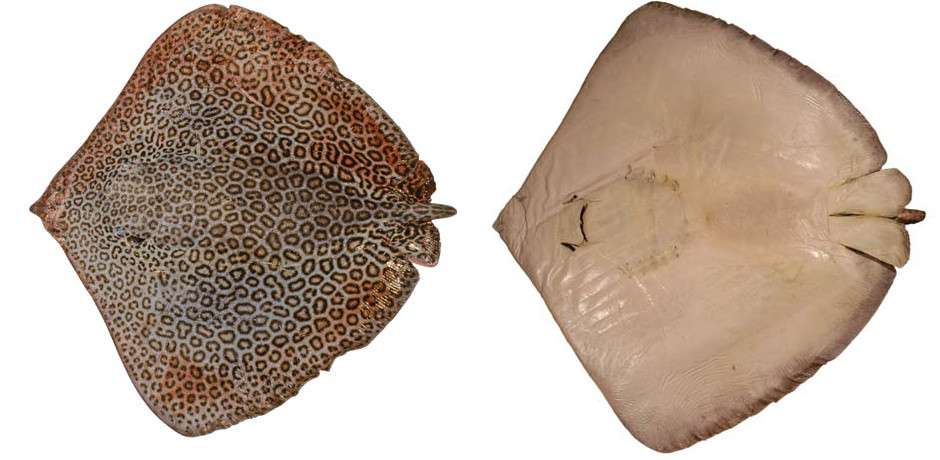
Photo: RR