Nov 10, 2026 |
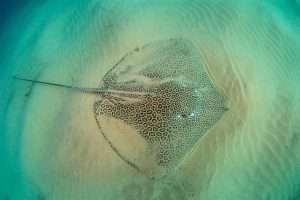
Fourteen years of dives by the Marine Megafauna Foundation (MMF) along the Inhambane coast have led to the identification of 164 leopard sharks, most of them adults or near-adults.
The study, published in the journal Endangered Species Research, was led by Jule Buschmann of the All Out Africa Marine Research Centre, with co-authors Nilza de Catarina and Anna Flam of the MMF, and Jennifer Keeping of All Out Africa and the University of Glasgow.
According to the MMF, between 2011 and 2025 researchers and trained volunteers carried out 9,219 monitoring dives on reefs between the Bazaruto Archipelago and Závora, recording 631 sightings of leopard sharks, also known as zebra sharks.
The work exposes a gap in Mozambican legislation. National fishing regulations protect only leopard sharks under 1.5 metres in length, leaving adults with no protection at all. The authors call for protection to be extended to animals of all sizes, for the most important reefs to be protected, for minimum approach distances for divers and for limits on bottom gillnets in critical habitats.
The species Stegostoma tigrinum is listed globally as Endangered on the IUCN Red List, following an assessment in June 2023. The western population, which includes Mozambique and extends to Southeast Asia, was moved to the Critically Endangered category in 2024, according to the University of Queensland’s Centre for Biodiversity and Conservation Science, which attributes the decline mainly to overfishing.
Also according to the MMF, of the 144 sharks whose sex could be determined, 101, around 70%, were female. Sightings were concentrated on a small group of reefs north of Tofo, where the team estimates that around 88 animals passed through over the period, within a range of 50 to 154.
One in three of the sharks identified was seen more than once, and one reappeared 11 years later. Records peaked in the austral summer, and Morrungulo, about 60 kilometres north of Tofo, had the highest number of sightings per dive, although with considerably less sampling effort.
The sharks’ behaviour towards divers was recorded during 89 encounters. In 55% of cases the sharks moved away, and they were around ten times more likely to do so when the nearest diver was between three and five metres away, and around 14 times more likely at less than three metres. Hence the recommendation that dive operators keep more than five metres away from a resting leopard shark.
The team also documented three courtship events, at Tofo in January 2020 and October 2022 and at Morrungulo in November 2021, the first recorded in the Western Indian Ocean. The researchers acknowledge that the Inhambane coast may be important for the species’ reproduction, which has yet to be confirmed, and point to the reefs north of Tofo, already recognised as a Key Biodiversity Area and an Important Shark and Ray Area, and the possible corridors up to Morrungulo as candidates for protection measures.
Photo: sealadventures.fr