Oct 27, 2026 |
The seven GPS-collared buffalo in Gilé National Park have kept away from villages and fields, with no conflict recorded.
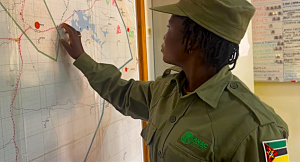
According to Gilé National Park, the translocated animals were tracked throughout the previous month and herd structure remains stable, with no mixing between groups and in line with the pattern observed since the translocation. The work is supported by the EarthRanger platform, ANAC and the Fondation François Sommer.
Four of the buffalo remained in the central-western area of the park, two in the western sector, near the Mulela River, and one in the western buffer zone, close to the Moniga River. Park management stresses that, although the collars provide only one location a day with varying accuracy, tracking remains essential for understanding how the animals use their habitat, strengthening protection and anticipating human-wildlife conflict, to the benefit of neighbouring communities.
The presence of buffalo in Gilé is the result of a reintroduction effort spanning more than a decade. The species had disappeared from the park and returned in 2012, with 20 animals from Marromeu National Reserve and Gorongosa National Park, reinforced the following year by 47 buffalo from Niassa, transported over more than 900 kilometres, according to CIRAD and the Fondation François Sommer, in a chapter published by Cambridge University Press..
In August 2024 the largest operation of its kind got under way, with the transfer of 200 buffalo from Marromeu to Gilé, when the park’s population stood at around 150 animals, according to BIOFUND, which manages the EU-funded PROMOVE Biodiversidade programme. The park, located in the Pebane and Gilé districts of Zambézia, is co-managed by ANAC and the Fondation François Sommer, which has worked there since 2007.
Photo: Gilé National Park